
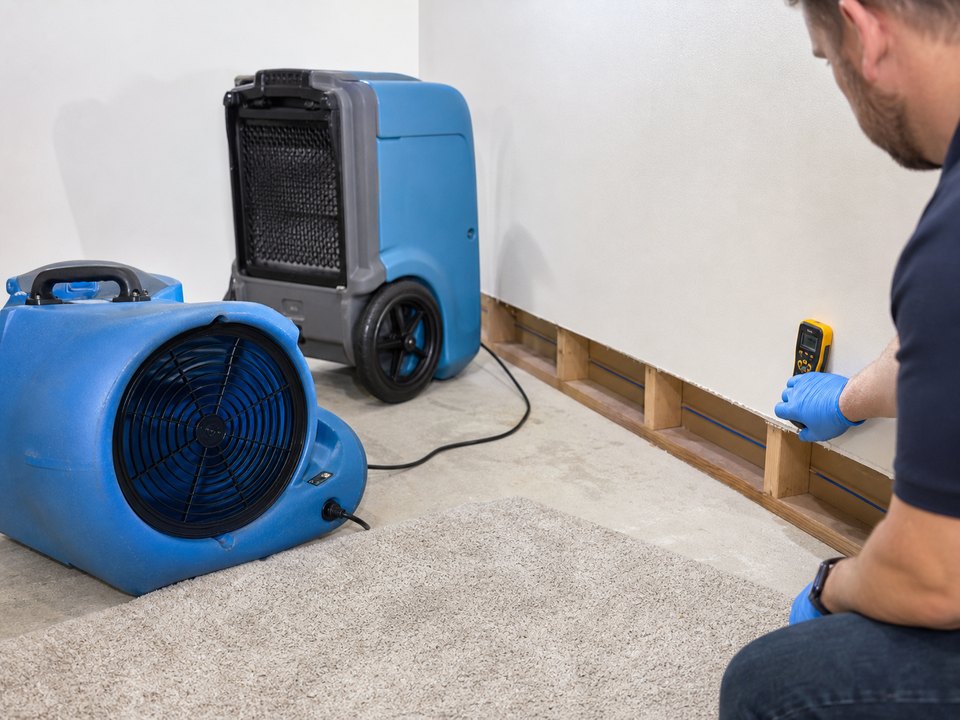

Basement assessment
Make the space safe before cleanup
Basement water may involve electrical equipment, stored contents, and an uncertain source. Those conditions affect what can be handled safely.
- Check accessAvoid entering standing water near electrical equipment.
- Identify the sourceDistinguish a supply leak, seepage, sump failure, or possible sewage backup.
Basement flooding can involve electricity, stored belongings, finished walls, and an uncertain water source. Do not enter standing water where outlets, wiring, or equipment may be energized. The EPA's flooded-home guidance gives additional safety advice.
Identify what brought the water in
Rain entering through a foundation, a failed sump pump, a supply leak, and a sewer backup call for different repairs and cleanup precautions. Tell us what you observed before the water rose, whether drains are backing up, and whether anyone has already shut off utilities. Avoid handling water that may contain sewage.
What the cleanup plan should cover
Water removal is the beginning. Finished walls, flooring, insulation, and stored contents may need assessment, drying, cleaning, or removal. The underlying drainage or plumbing problem also needs attention or the basement may flood again. Ask how the affected rooms will be checked and what must be resolved before repairs begin.