
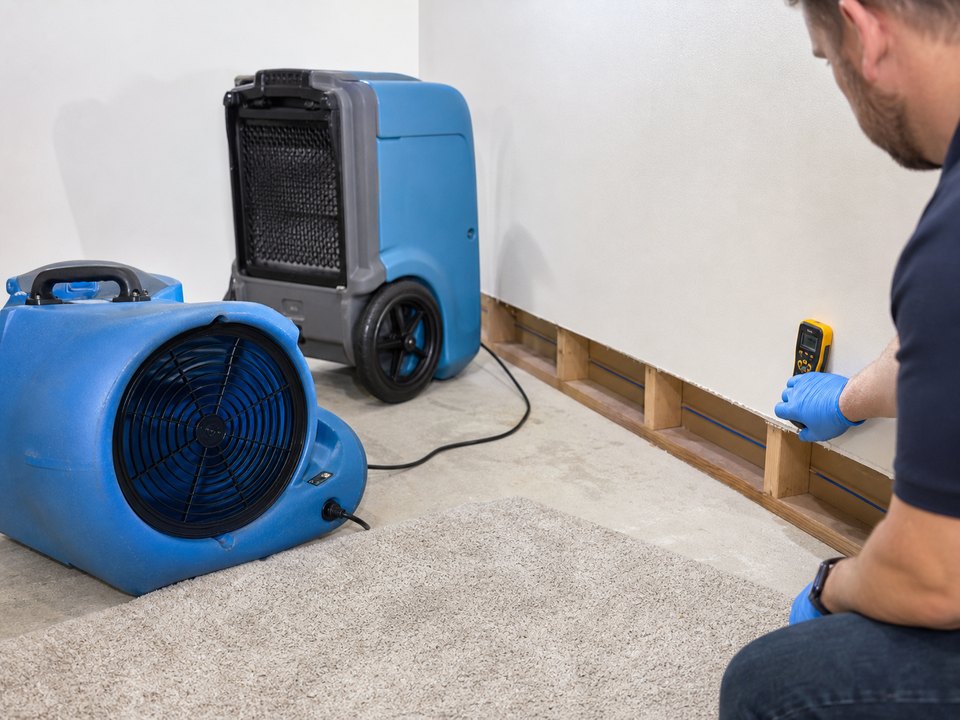

Assessment overview
What happens during an assessment
Water can travel beneath flooring and behind walls. An on-site assessment helps identify the source, locate affected materials, and set a clear plan for drying and repairs.
- Find the sourceCheck where the water came from and whether it is still active.
- Check affected materialsLook beyond the visible wet area to understand the scope.
- Explain the planOutline the recommended drying, cleanup, and repair steps.
Once the source is identified, the important question is which materials are wet and what can be done with them. A floor may need a different approach from the wall beside it. If standing water is near outlets or electrical equipment, stay out of the area until it is safe; the EPA's flooded-home guidance explains the shock risk.
What the assessment tells you
An assessment should distinguish visible water from moisture in materials that do not look wet. It also considers the source of the water and whether contamination is possible. From there, the proposed scope can explain water removal, drying, cleaning, and any materials that may need to be opened or replaced. The EPA recommends drying wet materials promptly to reduce mold risk, but no single technique or timeline fits every loss.
Common sources and next steps
A burst pipe may affect the room below it. A ceiling leak may come from plumbing or roofing above the stain. Basement flooding and appliance leaks create different access and material concerns. A plumber, roofer, or other qualified trade may need to repair the source before restoration work can finish.
Questions owners ask
Will all wet drywall or flooring be removed?
Not necessarily. Water source, material, depth of wetting, and the ability to dry hidden layers matter. Ask for the reason behind any proposed removal or in-place drying.
How long will drying take?
It depends on the materials and conditions found. Progress can be checked against a drying plan; a calendar promise made before assessment would be unreliable.
What if insurance is involved?
Photos, measurements, and a written scope can support your conversation with the insurer. Coverage and payment are determined by the policy and carrier.