
Appliance leak
Follow water beyond the appliance
Water from a washer, dishwasher, or refrigerator can pass under cabinets and flooring before it is noticed.
- Isolate the leakShut off the appliance supply when safe and arrange the needed repair.
- Check adjacent materialsInspect nearby cabinets, baseboards, flooring, and rooms below.
A washer hose, dishwasher connection, refrigerator line, or water heater can release water quietly. By the time a leak is noticed, moisture may have spread beneath flooring or cabinets.
First steps
If it is safe, turn off the appliance's water supply and avoid using it until the source is repaired. Keep away from wet outlets or electrical equipment. Photograph the leak and surrounding areas before moving an appliance, especially if access is tight.
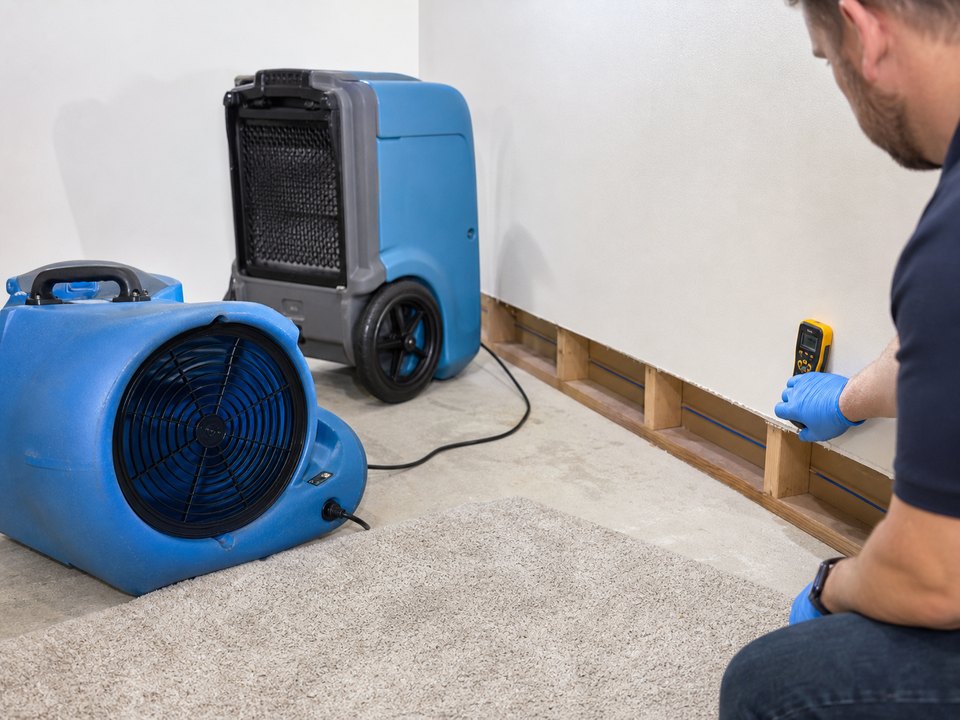
Look at nearby materials
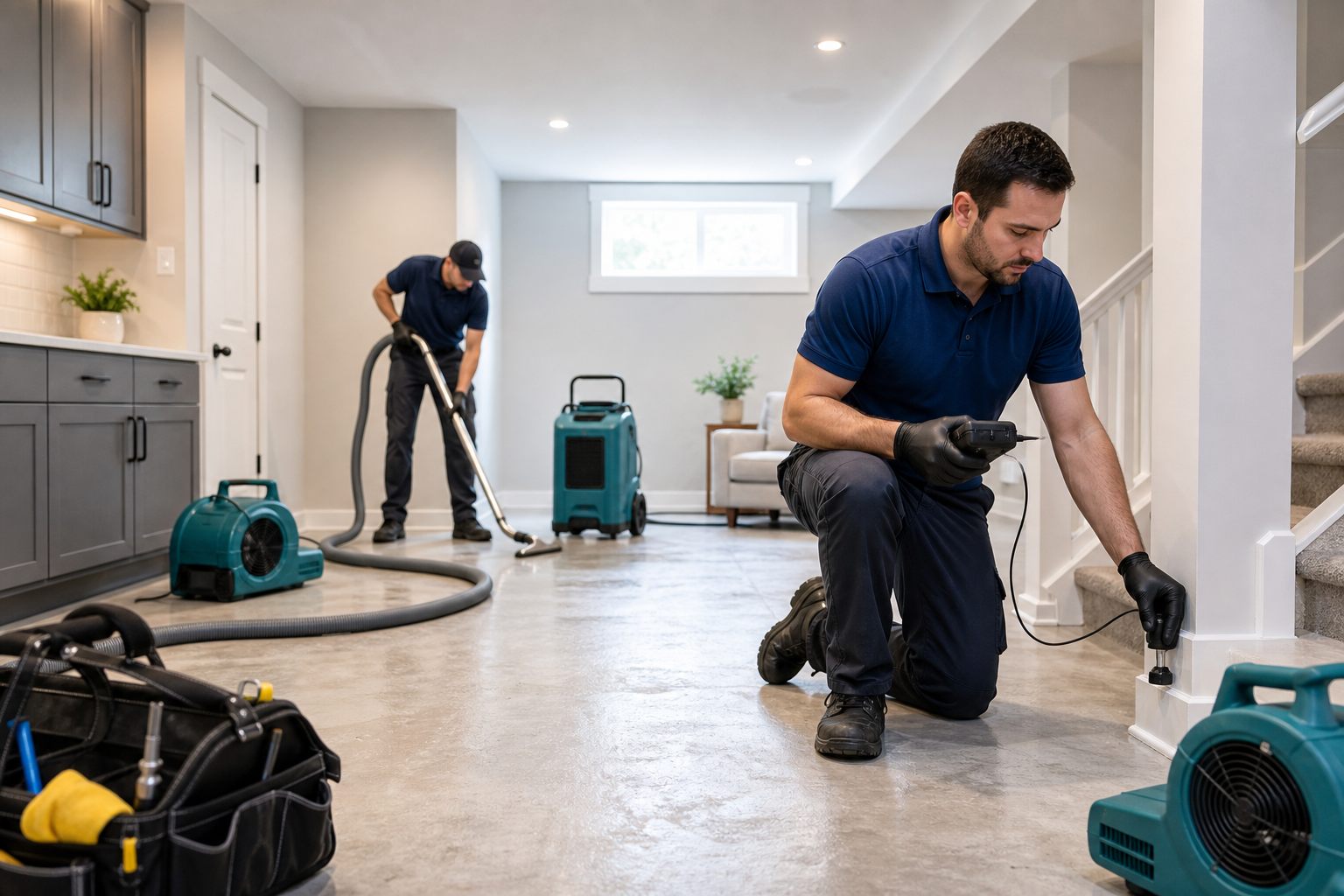
The visible puddle may not show what happened under toe-kicks, behind baseboards, or in the room below. The assessment should check these adjoining areas and explain whether they can be dried without removal. A plumber, appliance technician, or other qualified trade may need to fix the failed part; cleanup and finish repairs are separate decisions. If an insurer is involved, retain the source and repair records where practical.