
Standing water
What extraction needs to address
Removing visible water limits further contact with floors and contents, but it does not prove the building is dry.
- Check the sourceConfirm that water is no longer entering the space.
- Plan the follow-throughIdentify wet materials that need drying or further evaluation.
Standing water should be dealt with promptly, but safety comes first. Do not walk into water near outlets, appliances, or an electrical panel. If you can safely stop the source at a shutoff, do so; otherwise ask the appropriate trade for help.
What extraction does and does not do
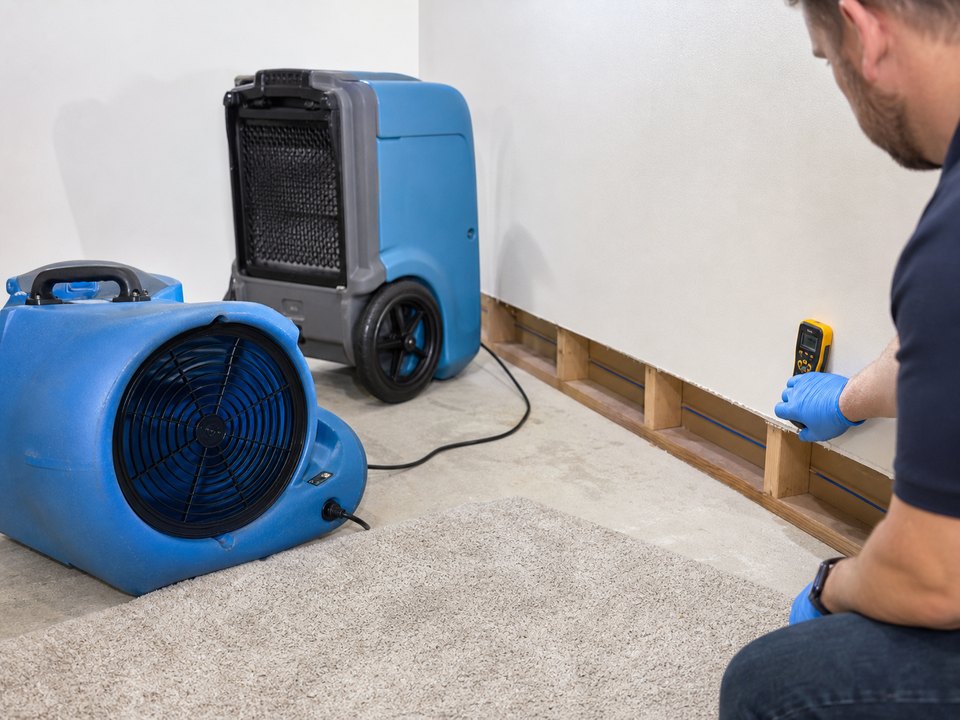
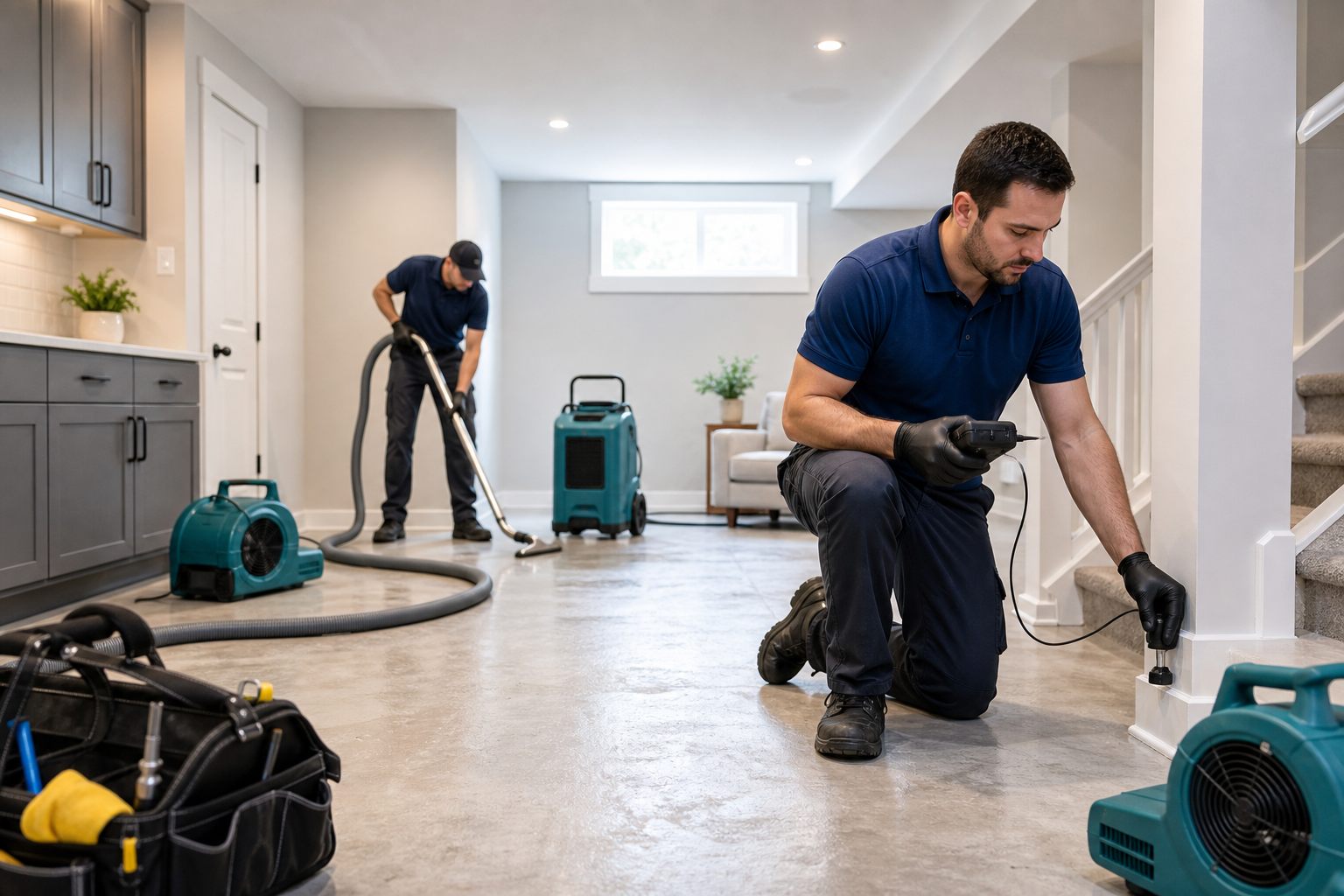
Removing water from a floor or basement limits further contact with materials and contents. It does not establish that subfloors, wall cavities, or insulation are dry. After the water is removed, the affected materials still need to be checked and a drying or repair plan discussed. The source and possible contamination determine how the area can be handled.
Before and after the visit
Keep people and pets out of the wet area. Move dry belongings only if it is safe, and photograph visible conditions from a dry position. Tell us when the water appeared and what may have caused it. Once extraction is complete, ask what will be monitored, which materials may need opening, and whether a plumber or other trade must repair the source. The EPA advises prompt drying, but the time required varies by material and site conditions.