
Pipe break
From source repair to cleanup
A broken pipe can wet several rooms before it is found. Restoring the space starts with a safe shutoff and a clear picture of where the water went.
- Stop the flowHave the damaged plumbing repaired by the appropriate trade.
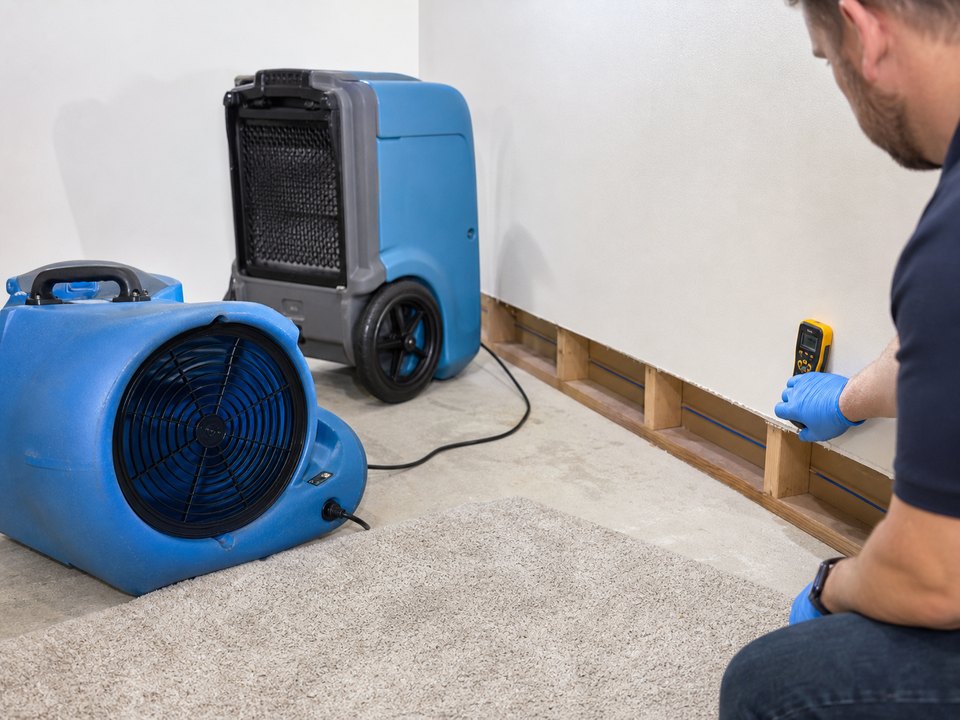
- Trace the spreadReview floors, walls, and rooms below the break for hidden moisture.
After a pipe breaks, water may reach more than the room where the break is visible. Start by shutting off the supply if you can reach it safely and arranging plumbing repair. Keep clear of wet electrical equipment and sagging ceilings.
Trace where the water went
A pipe in a wall or upper floor can wet insulation, framing, floors, and rooms below. The cleanup scope should look at those connected areas, not only the puddle beneath the break. It should also distinguish clean supply water from water that may have contacted contaminants on its path.
Plan the repair sequence
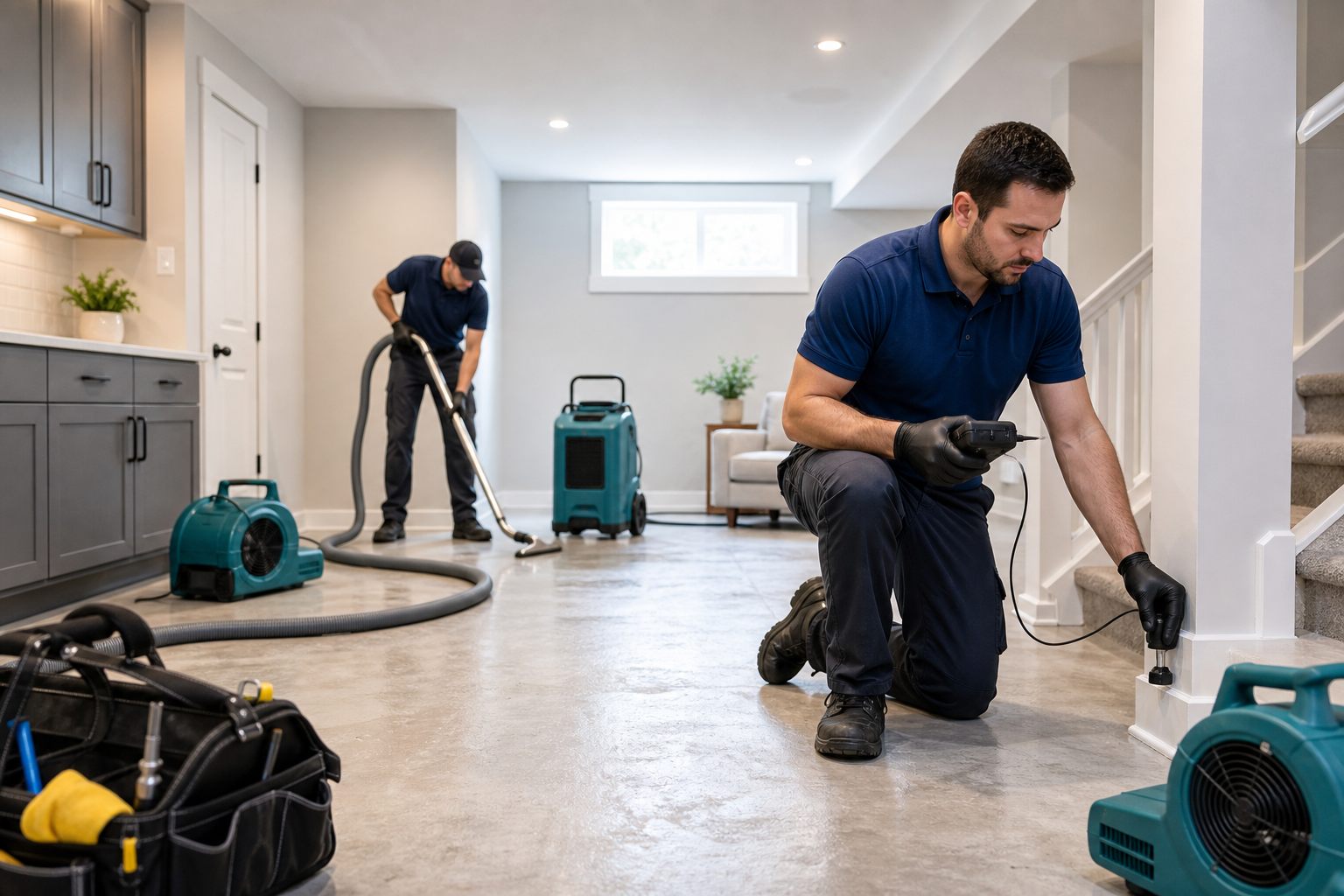
The plumber repairs the pipe. Water removal and drying then address affected materials; reconstruction comes later if finishes or assemblies must be opened. Ask which rooms and materials are included in the assessment, and whether a ceiling or wall must be made safe before anyone works underneath it. Photographs and a written scope may be useful if you contact your insurer, but coverage depends on your policy.