
Surface residue
Choose cleaning by material
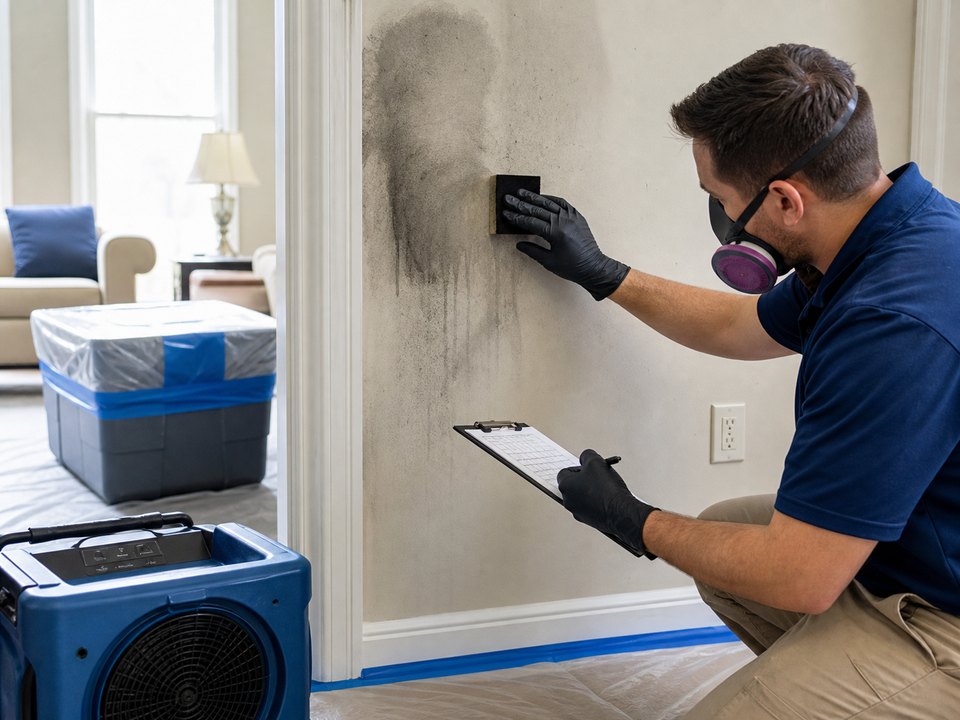
Soot behaves differently on painted walls, unfinished wood, metal, and fabrics. A method that works on one surface may spread residue on another.
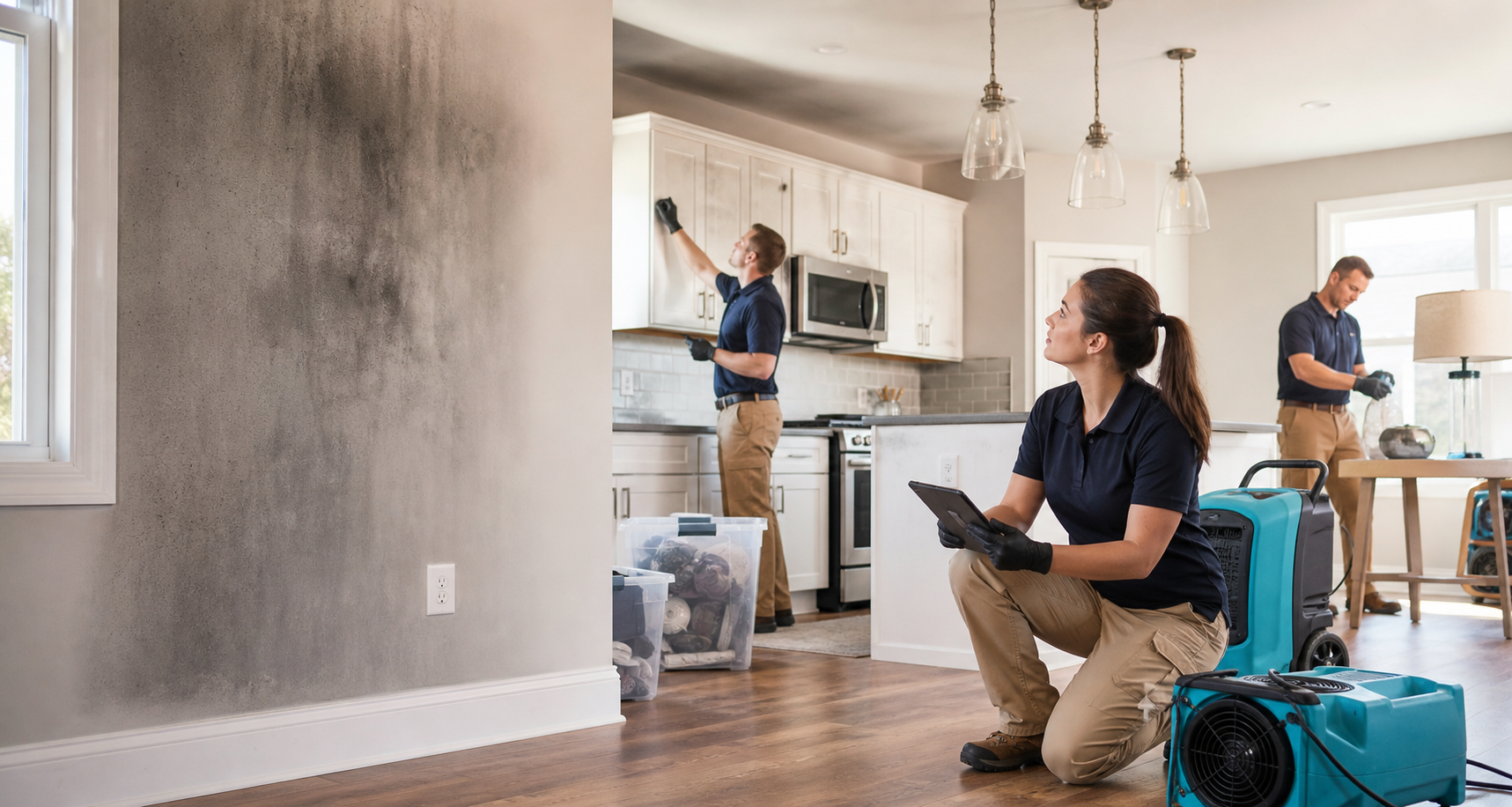
- Assess the depositNote where residue settled and what it contacted.
- Test the methodUse an approach suited to the finish before cleaning a wider area.
Soot is not one uniform stain. Residue from a cooking fire can behave differently from residue after a larger structure fire, and a cleaning method that works on tile may smear a painted wall.
Match the method to the surface
The assessment should note where residue settled and whether the finish is porous, painted, or delicate. Testing a small area before broader cleaning can prevent additional damage. Items exposed to heat, smoke, and firefighting water may need separate decisions.
What comes after cleaning
If a surface cannot be cleaned to an acceptable condition, repair or replacement may be discussed. Odor can also remain in materials that look clean, so the scope should distinguish visible soot removal from odor work. Avoid scrubbing an unfamiliar deposit before you know how it will respond.