
Kitchen fire
Look beyond the cooking area
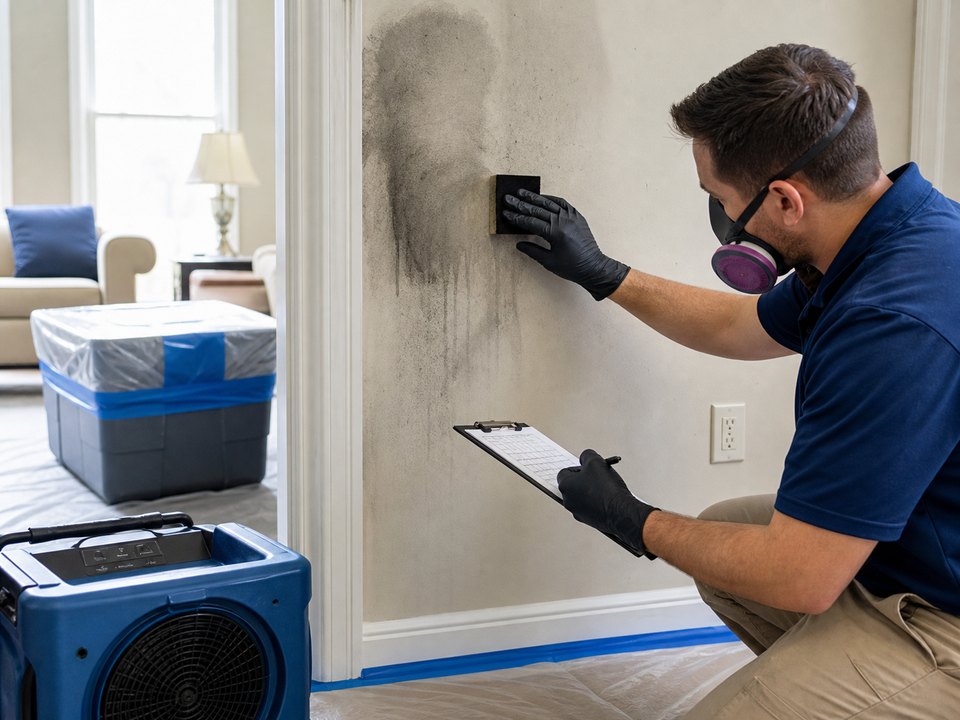
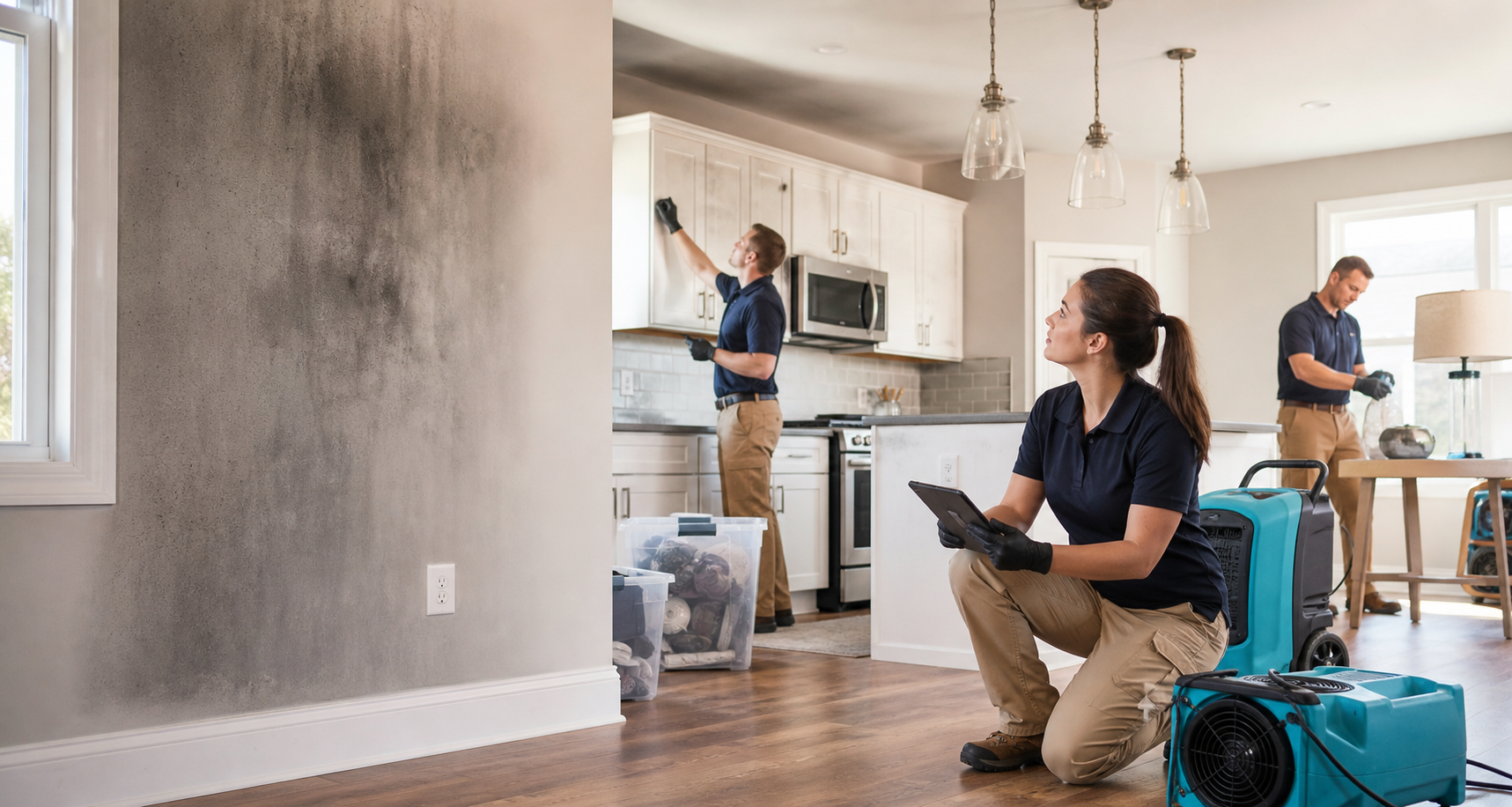
Even a contained cooking fire can leave soot on nearby finishes and odor in adjoining rooms.
- Check surfacesReview cabinets, ceilings, and ventilation paths.
- Plan cleanupMatch cleaning and repairs to the type and extent of residue.
Even when a kitchen fire is contained quickly, soot and smoke may reach cabinets, nearby rooms, and the ventilation path. Wait for the appropriate authority to clear the space before entering, and do not use damaged electrical or cooking equipment.
What needs a closer look
The assessment should review the burned area, surrounding finishes, contents, and any water used to extinguish the fire. A light deposit on a washable surface is different from residue inside a cabinet or heat damage behind the range. Do not assume every item must be discarded or that every wall can be cleaned in place.
From cleanup to repairs
The scope may include securing an opening, cleaning soot, addressing odor sources, drying wet materials, and replacing damaged finishes. Ask how the kitchen will be separated from usable rooms and which decisions depend on inspecting concealed conditions. Photos and a written scope may support an insurance conversation, but the policy and carrier determine coverage.