
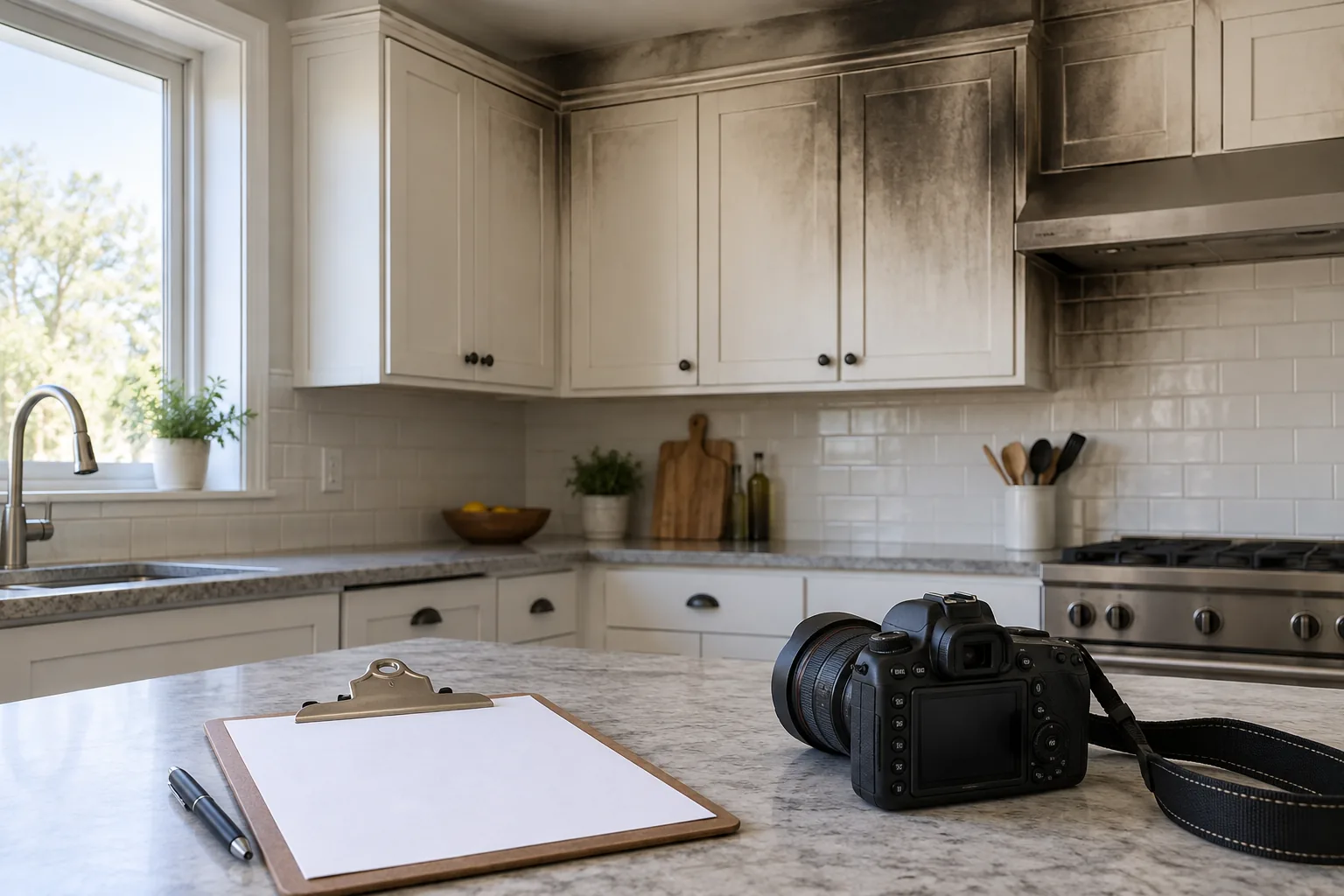
After a kitchen fire, first follow emergency responders' direction about re-entry and utilities. Once it is safe, the decisions shift to documenting the condition, protecting the property, and understanding what needs cleaning or repair.
Record the condition without disturbing it unnecessarily
Photograph the kitchen and adjacent rooms from safe locations. Note water used in suppression, smoke residue, damaged appliances, and any openings that need securing. Keep receipts for reasonable temporary measures. If you plan to make a claim, ask your insurer how it wants the loss reported and inspected; policy terms determine coverage. Connecticut's Insurance Department consumer resources provide a starting point for claim-process questions.
Plan the physical work separately
A restoration assessment may identify materials that can be cleaned and those requiring removal. Electrical, plumbing, and building repairs may need qualified trades and permit review. The repair estimate should describe the proposed work clearly, whether or not it is part of a claim. See kitchen fire restoration and insurance documentation.
Frequently Asked Questions
Should I throw everything away before the adjuster visits?
Do not discard items without documenting them when it is safe to wait. Follow your insurer's instructions while taking reasonable steps to prevent additional damage.