
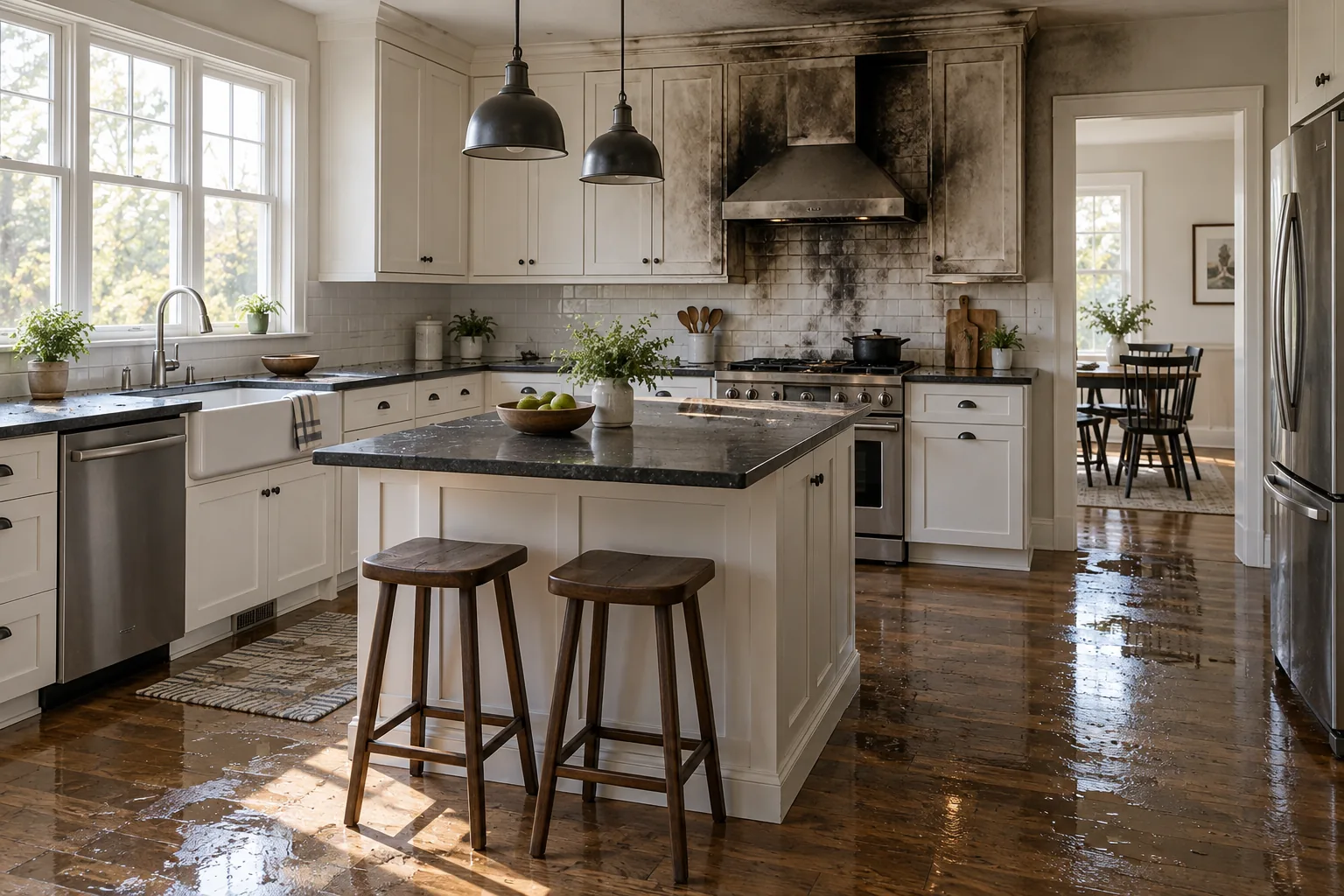
A fire can affect more than the room where flames were visible. Heat, smoke residue, and water used to extinguish the fire may reach nearby spaces. The extent depends on the event, building layout, and materials present.
Several kinds of damage may overlap
Heat can damage finishes and structural components. Smoke can leave residue on surfaces and contents, while water can soak floors and walls. An assessment should distinguish these conditions rather than treating every dark mark as the same problem. Avoid entering until emergency authorities say the property can be accessed, and be cautious around unstable surfaces or utilities.
From stabilization to repair
The sequence may include securing openings, controlling water, evaluating what can be cleaned, and planning demolition or reconstruction. Keep a record of the affected areas and ask who will coordinate each phase. For re-entry precautions after a disaster, see CDC safety guidance. Read about fire and smoke restoration for the service overview.
Frequently Asked Questions
Is an unburned room automatically unaffected?
No. Smoke and water can travel, but each room should be assessed on its own conditions.