A recurring backup may come from a blockage, a displaced connection, or a damaged section of pipe. The repair plan should follow the finding rather than assume that every slow drain needs excavation.
Identify the problem
A drain-cleaning attempt or camera inspection can help locate a problem, but access, pipe condition, and the extent of damage still need assessment. We explain what is known, what remains uncertain, and whether a qualified trade or permit is needed for the proposed work.
Expose and repair the line
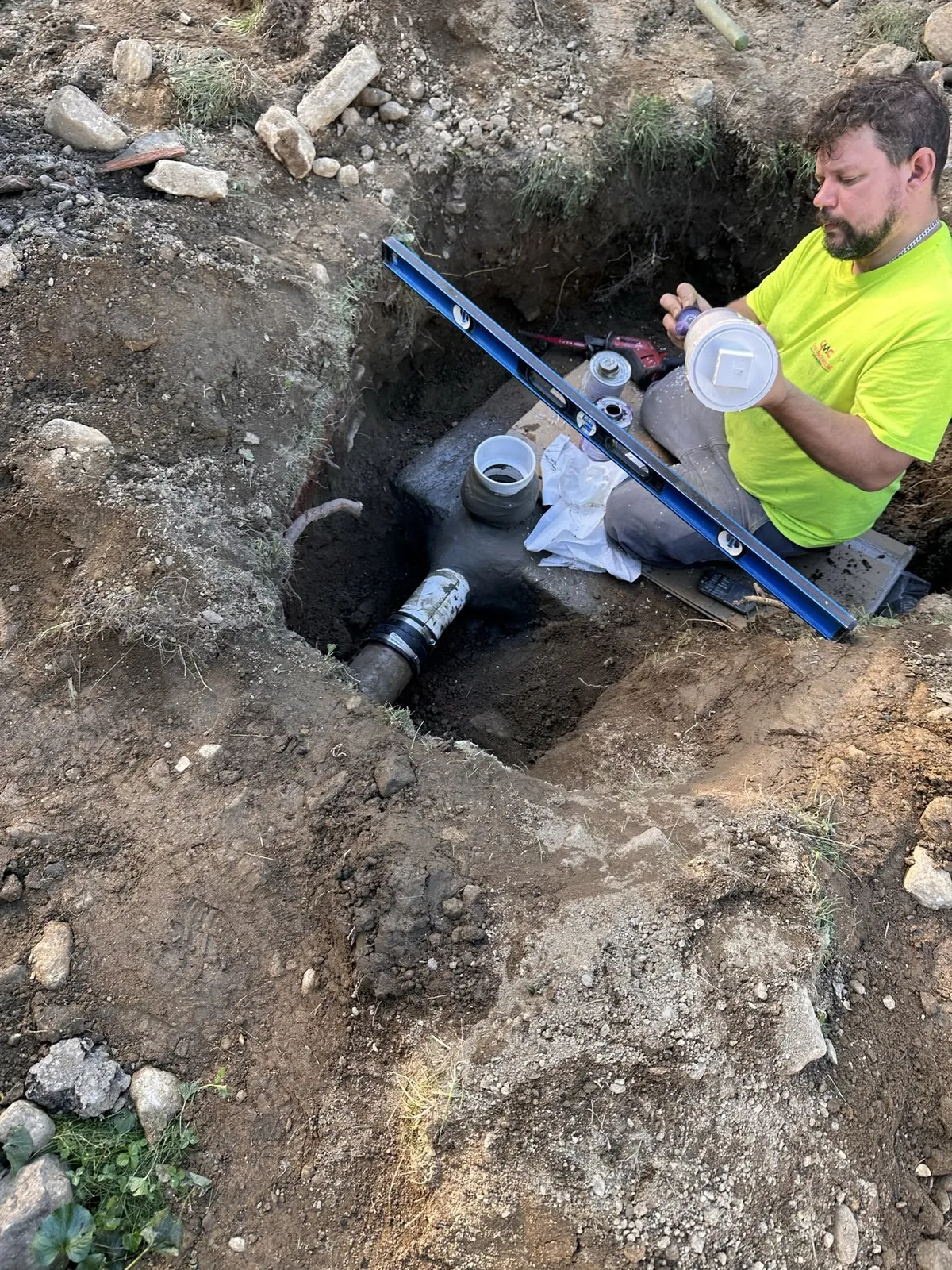
When a section must be reached from outside, the work may involve locating utilities, protecting the surrounding area, excavation, removing the damaged section, and fitting a suitable repair. Conditions under the ground can change the scope once the pipe is exposed.
Check the result and restore the area
The repaired connection should be checked before backfill. Surface restoration and any affected interior cleanup are separate scope items to discuss before work begins. A repaired pipe does not by itself resolve moisture or sewage damage inside the building.
Frequently asked questions
Q: Will jetting fix a broken pipe? A: Jetting is a cleaning method, not a structural repair. A separated or damaged section may need a different approach after its location and condition are confirmed.
Q: Can you help with an interior backup as well? A: The sewage backup service covers assessment and cleanup inside the property. The pipe and the affected interior may need coordinated but distinct scopes.
Call (860) 951-1822 or send the property details to discuss the line and any active backup.