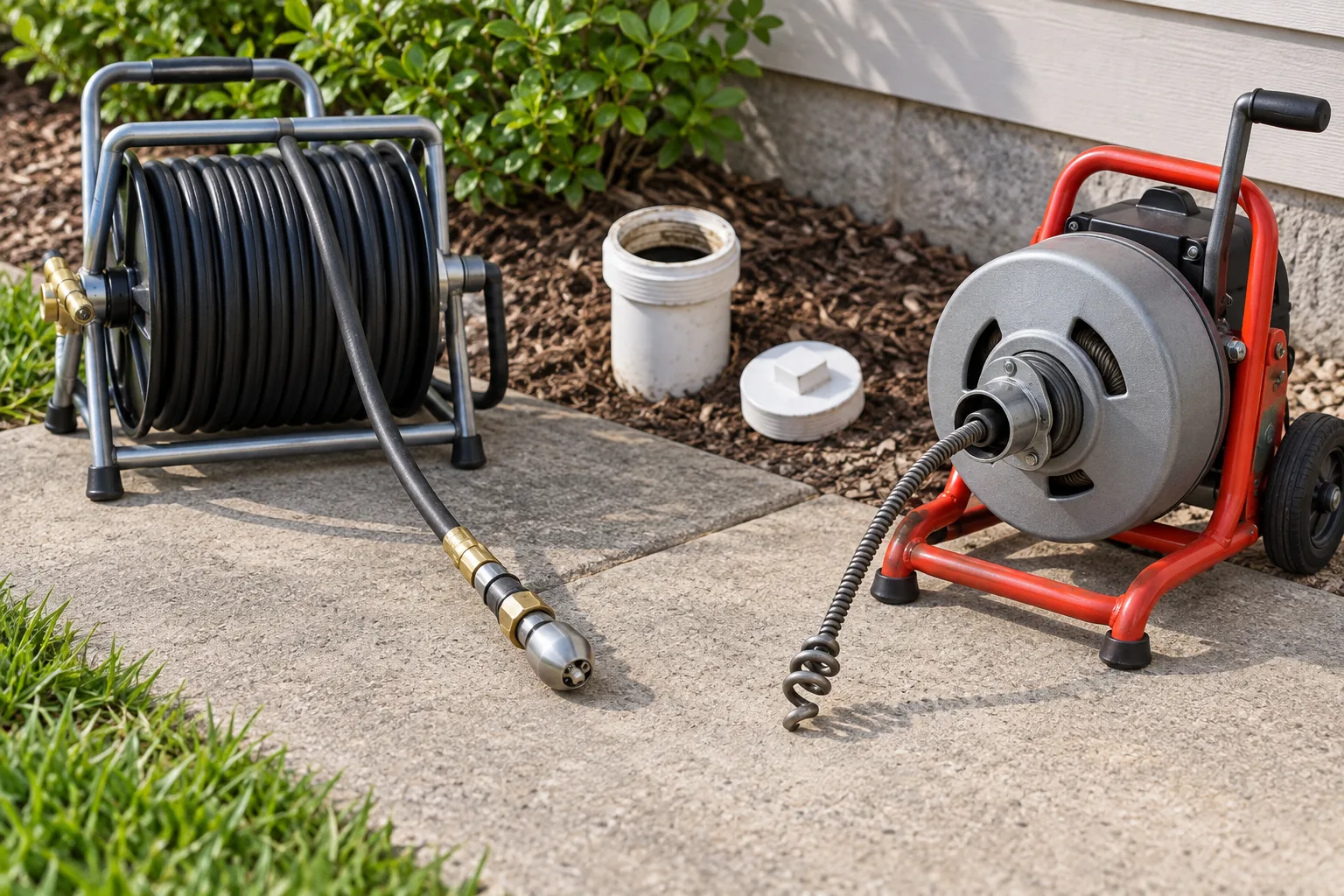
Cable snaking and hydro-jetting both clear certain drain obstructions, but they work differently. The better choice depends on the pipe's condition, the kind of buildup, and the access available.
How the methods differ
A cable tool can break through or retrieve some clogs. Hydro-jetting uses pressurized water to clean selected deposits along the pipe wall. Neither method repairs a broken or collapsed line. Before applying pressure, a plumber should consider whether the pipe can tolerate it and whether a camera inspection would clarify the problem.
Avoid repeated short-term fixes
If a line backs up again soon after clearing, ask whether roots, a damaged section, grease accumulation, or another condition remains. Keep the service history and inspection findings together. The EPA's sewer cleaning and inspection guidance explains why inspection and cleaning are different tasks, though it addresses collection systems rather than your individual line. If sewage has overflowed indoors, cleaning the line will not clean the affected room; see sewage backup cleanup.
Frequently Asked Questions
Is jetting always more thorough?
It can be effective for suitable buildup, but no method is automatically best for every line. Inspection and pipe condition guide the choice.