
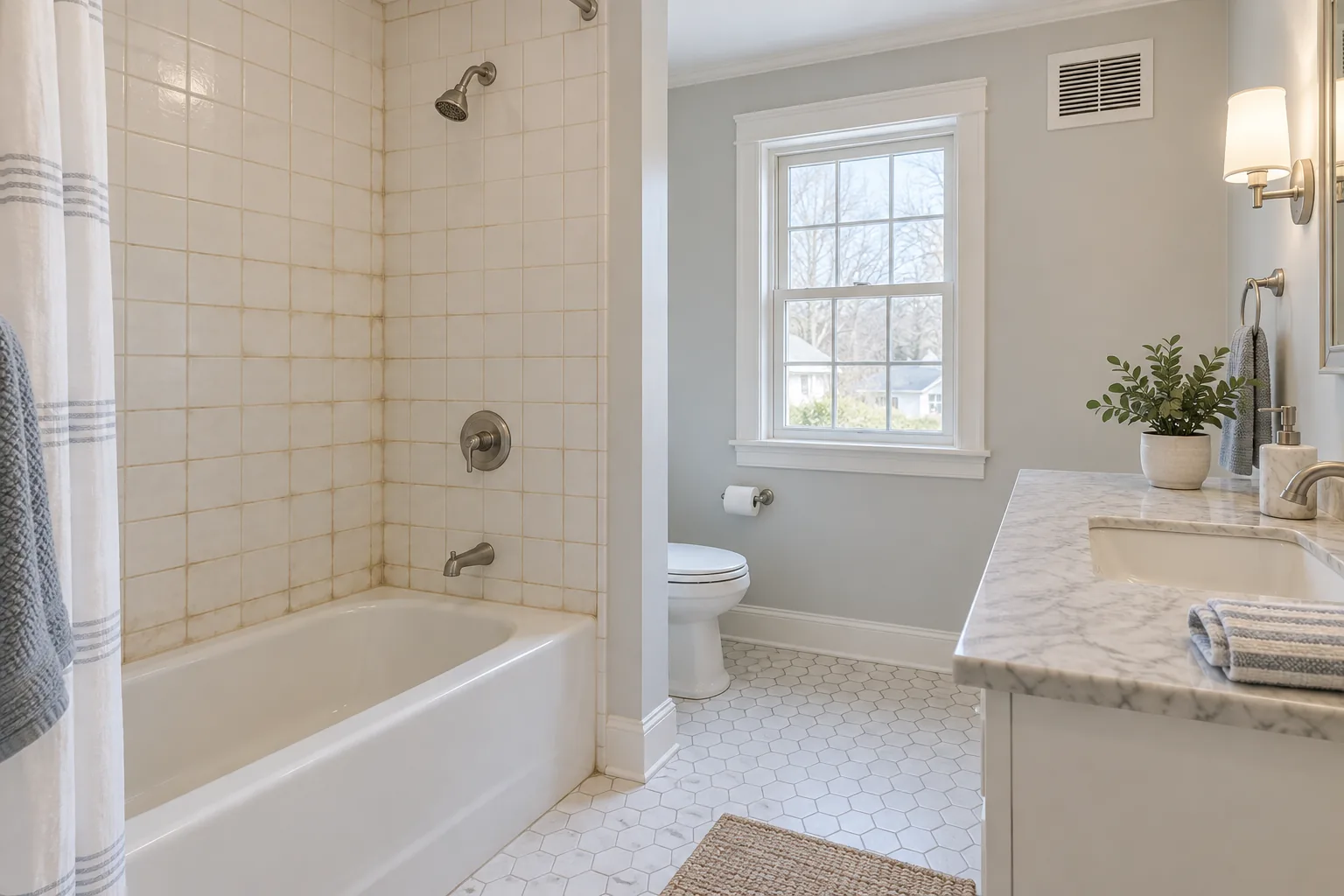
The phrase “black mold” is often used for any dark growth. Color cannot identify a mold species or tell you how to clean it. “Mildew” is also used loosely in everyday conversation, so the practical questions are where the moisture is coming from and what materials are affected.
Look at the condition, not the nickname
Mold can grow on many damp materials and appear in different colors. A small area on a washable surface is different from growth on porous drywall or inside a wall cavity. Avoid disturbing extensive growth or drying contaminated material with ordinary household fans. The CDC advises that mold color does not indicate how dangerous it is.
What should happen next
Find and correct the moisture source. Determine whether affected materials can be cleaned or should be removed, and consider professional help when the area is extensive, hidden, or tied to contaminated water. The EPA mold cleanup guide explains homeowner considerations. See mold remediation for a service overview.
Frequently Asked Questions
Do I need to know the species before cleaning?
Often the visible moisture problem and affected materials drive the response. Testing may be useful for a specific question, but it is not a substitute for correcting the source.