

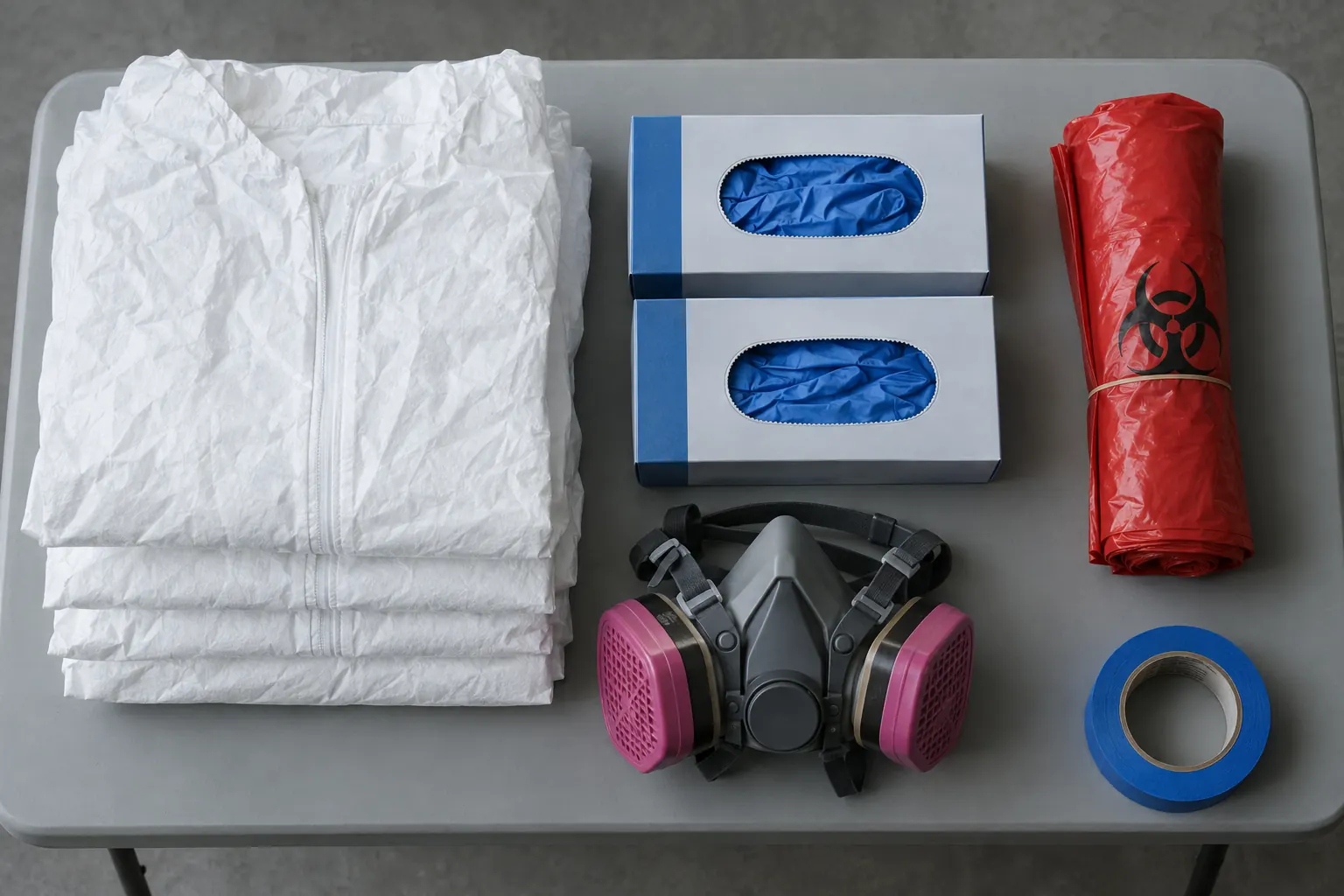
Exposure control
Understand where material traveled
Visible staining may not show the full affected area, especially where fluid reached seams or porous material.
- Limit contactKeep others out of the affected space until hazards are understood.
- Assess materialsCleaning or removal depends on what was exposed and whether it is porous.
When blood or other bodily fluids affect a property, keep others away from the area and avoid direct contact. Cleanup is not simply a matter of covering a stain: the material and the surface beneath it determine what can be cleaned and what may need removal.
How the area is evaluated
An assessment considers where the material is visible, whether it entered seams or porous materials, and who can safely access the space. The scope may include isolating the area, removing unsalvageable material, cleaning appropriate surfaces, and disposing of waste under applicable rules. The exact method depends on the conditions found.
What you can tell us
A general description, property address, and access contact are enough to start. You can discuss sensitive details privately with the person handling intake. For workplace exposures, employers must also consider the applicable OSHA bloodborne pathogens standard; a website page is not a site-specific exposure plan.